THE T-MOBILE PRESSURE COOKER: A REMATCH A DECADE IN THE MAKING
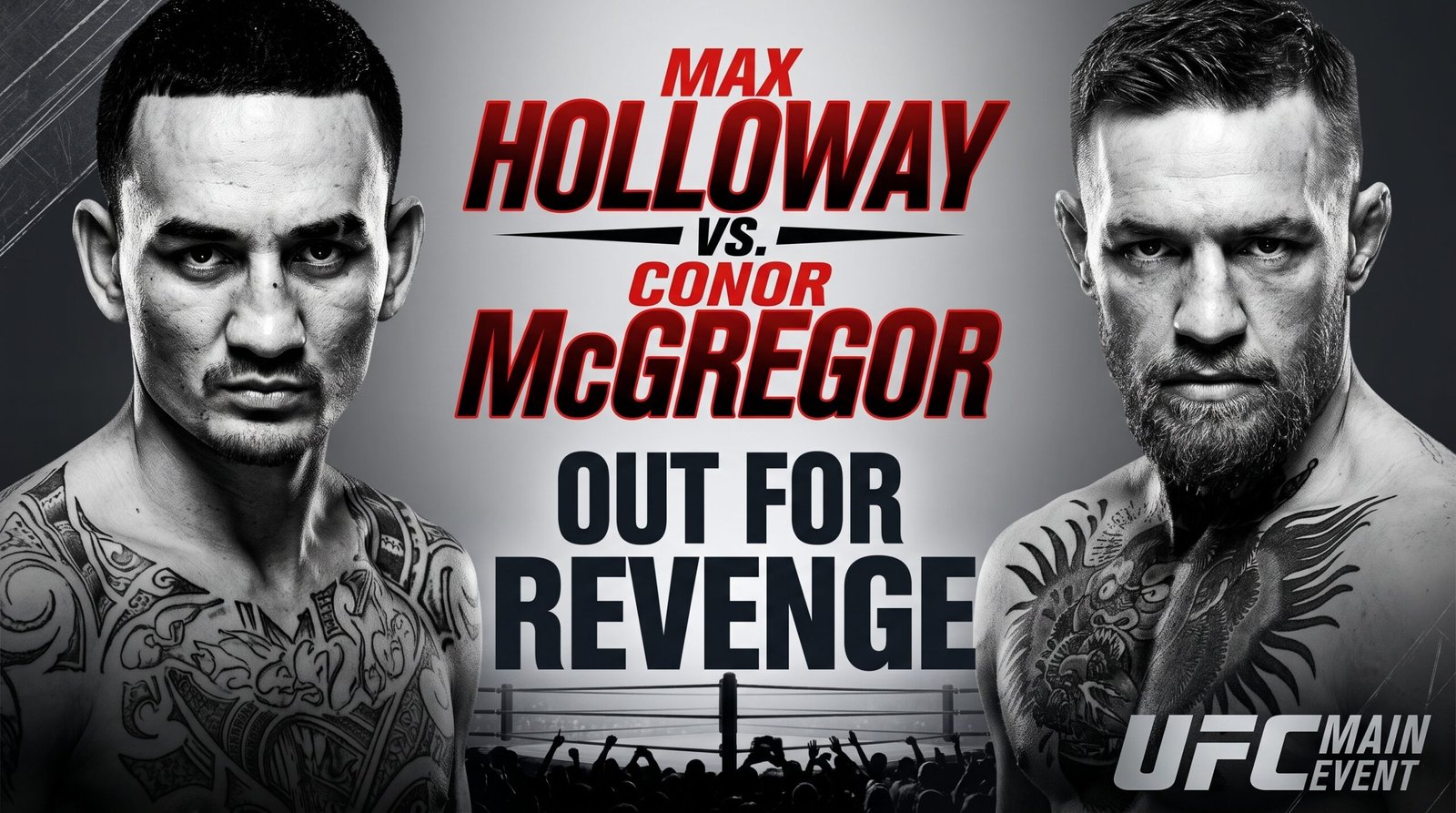
The air inside the T-Mobile Arena at UFC 329 wasn’t just electric; it was thick with the kind of pure animosity that only a decade-long grudge can manifest. When the lights cut to black and the haunting Irish notes of “The Foggy Dew” transitioned into a booming hip-hop bassline, the Las Vegas strip felt like it might split open. This wasn’t just another banger on the calendar; this was Conor McGregor vs. Max “Blessed” Holloway 2—the blockbuster sequel the fight world has been salivating over for ten years.
Back in 2013, these two were just hungry prospects scrapping for a spot in the featherweight rankings. McGregor secured the decision that night but left the cage with a shredded knee. Fast forward to the UFC 329 main event, and both men have ascended to mythical status. “The Notorious” was out to prove he still possessed that championship mettle and the fabled “touch of death” in his left hand. Across the octagon, Holloway was riding a violent wave of momentum, cement-marking his status as the best boxer in the UFC and the rightful owner of the BMF title.
The Irish faithful were out in force, fueled by whiskey and tricolors, while the “Blessed Express” fans brought the deafening “Chee-hoo!” chants that rattled the rafters. For the first five minutes, it was a striking clinic—a high-stakes chess match played at 100 miles per hour. But as the clock bled into the second round, the narrative of the night—and the legacy of two Hall of Famers—shifted in a chaotic heartbeat. The pristine violence we expected was hijacked by one of the most bizarre and hotly debated sequences in the history of the sport.
THE MECHANICS OF A TRAGEDY: TECHNICAL ANALYSIS OF THE CLASH
Before the medical chaos took over, the technical display was a purist’s wet dream. McGregor looked sharp, utilizing a wide, karate-centric stance and fluid lateral movement. He was head-hunting with bad intentions, looking for the angle to crack Max’s chin early. Holloway, the undisputed volume king with a legendary gas tank, was happy to eat a glancing shot to land two of his own. Max established a piston-like jab, peppering McGregor’s midsection to drain his cardio and disrupt the Irishman’s rhythm.
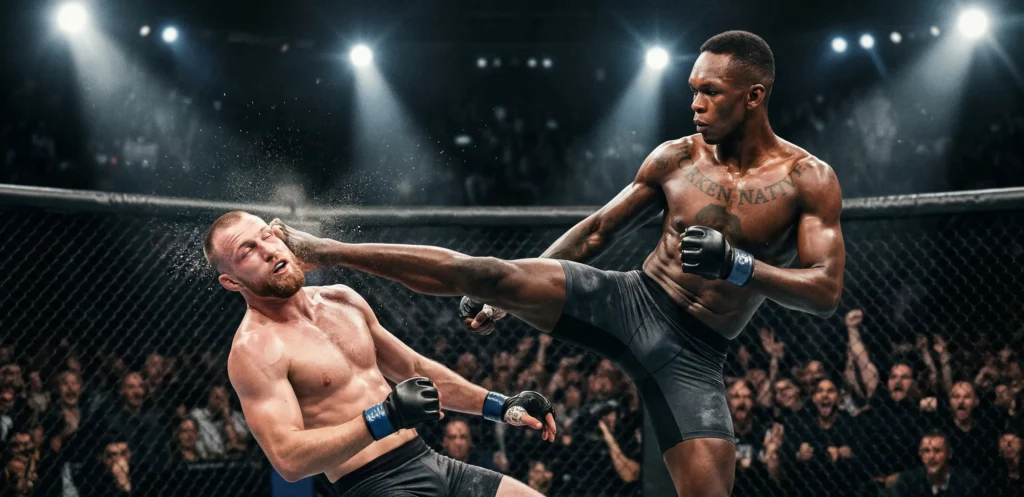
At the 69-second mark of the second round, the highlight reel turned into a tragedy. McGregor loaded up for a signature jumping roundhouse kick—a high-amplitude technique designed to catch a dipping opponent. As he launched, the timing looked perfect. But as his lead leg—the same left limb with a history of surgical trauma—planted back onto the canvas, it failed catastrophically.
The sound was sickening, described by ringside media as a snapping branch amplified through the PA system. McGregor’s knee didn’t just buckle; it disintegrated at a grotesque angle. The Irishman hit the deck instantly. The ghost of 2013 had returned. Holloway, sensing the kill, moved in to engage in some brutal ground-and-pound. But as he hovered over a compromised McGregor, Holloway did the unthinkable: he paused. He looked at McGregor’s mangled leg, locked eyes with the agonizing Irishman, and gestured for referee Herb Dean to wave it off.
McGregor’s reaction to this “mercy” was unadulterated fury. “Finish the f****** fight! Hit me! Stand up and fight me!” he roared, violently slapping the mat. To McGregor, a mercy stoppage was a deeper insult than a walk-off KO. Having his rival show pity in the heat of a slugfest was a violation of his warrior code. Check out our detailed breakdown of how fighters deal with mid-fight trauma in this
Anatomy of Octagon Injuries
feature.
BY THE NUMBERS: UFC 329 STATISTICAL BREAKDOWN
The raw data from the six minutes of combat reveals a fight sitting on a razor’s edge. In the opening frame, McGregor held a slight edge in significant strikes, connecting with 28 to Holloway’s 24. According to official UFC 329 metrics, Conor landed a staggering 65% of his power shots to the head, actively trying to test Holloway’s legendary durability while chopping at his base with heavy calf kicks.
Holloway, however, was playing the long game. He landed 18 body strikes in the first round alone, targeting McGregor’s notorious conditioning. By the start of the second, the momentum was shifting. In the 69 seconds before the ACL pop, Holloway had already out-landed McGregor 15 to 6. Max’s jab was finding the mark with 80% accuracy, effectively blinding Conor and forcing the desperate, high-risk kick that led to the injury.
There were zero takedown attempts; this was a pure stand-up war. The striking charts show McGregor was hunting for a singular, fight-ending blow, while Holloway was building multi-strike combinations. For more on how volume striking matches up against knockout power, read our
Striking Meta in Modern MMA
analysis. The numbers prove we were entering the crucible of the fight—the moment where wills were about to be tested.
THE AFTERMATH AND THE FUTURE: PREDICTIONS FOR THE TRILOGY
The controversy didn’t stay inside the cage. Within an hour of the medical stoppage, McGregor was on social media nursing a bruised ego and a ruined knee. While the official ruling was a TKO via medical stoppage, McGregor blamed the UFC production team and the equipment. “The canvas was a skating rink! Disgraceful preparation,” he tweeted, posting shots of what he claimed were slick spots on the logos. “I was dusting him until the floor gave out. Holloway? You’re a coward for calling the ref. Finish the fight or get out of the way!”
Holloway, draped in his BMF belt at the post-fight presser, laughed off the “slippery canvas” excuses. As covered by
this exclusive report
, Holloway stated, “The guy is delusional. We fought on the same mat. He’s getting old, his bones are brittle, and his body can’t keep up with his mouth. He should thank me for not turning his face into hamburger meat.”
The fallout leaves the division in limbo. For McGregor, another reconstructive surgery at this stage could be the end of his elite run. The fast-twitch explosiveness required to hang with the P4P best evaporates when you can’t trust your foundation. For Holloway, the win feels hollow. He wanted to exorcise the 2013 demon with a clean finish, but now he’s defending his honor against McGregor’s psychological warfare.
Despite the bitterness, the MMA world is already screaming for a trilogy. They are 1-1, with both fights marred by injury drama. McGregor needs redemption to prove he isn’t washed, and Holloway wants to prove he doesn’t need a freak accident to dismantle the Irishman. If McGregor can recover—a massive “if”—the UFC will undoubtedly book this for a stadium show. Until then, we’re left rewatching the “slippery canvas” footage and wondering what would have happened if Max had ignored his conscience and kept swinging.
FAQ
1. What was the official result of McGregor vs. Holloway 2 at UFC 329? The official result was a TKO victory for Max Holloway via medical stoppage at 1:09 of the second round due to a McGregor ACL injury.
2. Why did Conor McGregor call Max Holloway a “coward” after the fight? McGregor was furious that Holloway gestured for the referee to stop the fight instead of continuing to strike while McGregor was downed and injured, viewing the “mercy” as a sign of weakness and disrespect.
3. Did the UFC address the “slippery canvas” claims? While the UFC has not issued a formal statement on the mat conditions, Max Holloway and several other fighters on the card dismissed the claims, stating the traction was standard for a major event.